

 See My Latest Article on HelloNation
What should you look for when choosing an LED bulb?
The right LED bulb should match the fixture, provide the desired amount and color of light, and operate safely within the fixture’s limits. Brightness, color temperature, shape, dimming capability, and moisture rating all affect whether a bulb performs well.
LED bulbs use less electricity and typically last longer than traditional incandescent bulbs, but not every LED bulb is suitable for every socket or room. Reading the label before buying helps prevent poor lighting, flickering, overheating, and premature failure.
How bright should an LED bulb be?
LED brightness is measured in lumens, not watts. Watts describe energy use, while lumens describe the amount of visible light.
Approximate comparisons can be useful:
- A traditional 40-watt incandescent bulb produces about 450 lumens.
- A traditional 60-watt bulb produces about 800 lumens.
- A traditional 75-watt bulb produces about 1,100 lumens.
- A traditional 100-watt bulb produces about 1,600 lumens.
For a bedside lamp, 450 to 800 lumens may be comfortable. A kitchen ceiling fixture may need several bulbs or a higher total lumen output. Hallways, closets, and small bathrooms often require less light, although dark finishes and limited natural light can increase the amount needed.
Avoid choosing a bulb based only on the highest watt-equivalent number. Excessive brightness can create glare, especially in rooms with glossy countertops, polished floors, or reflective walls.
What color temperature is best for each room?
Color temperature is measured in Kelvin, abbreviated as K. Lower numbers produce warmer, more yellow light, while higher numbers appear cooler and more blue-white.
Common choices include:
- Warm white, about 2,700K: Comfortable for bedrooms, living rooms, dining areas, and lamps.
- Soft or neutral white, about 3,000K to 3,500K: Useful for kitchens, bathrooms, entryways, and general household lighting.
- Cool white, about 4,000K: Helpful in work areas, utility spaces, garages, and locations where detail is important.
- Daylight, about 5,000K to 6,500K: Very crisp and blue-white, often used for workshops or task lighting.
Color temperature is a matter of comfort as well as visibility. Many households prefer warm light in relaxing spaces and neutral or cool light where cleaning, food preparation, or detailed work takes place. Using dramatically different color temperatures in adjacent fixtures can make a home feel visually inconsistent.
Does the bulb shape and base matter?
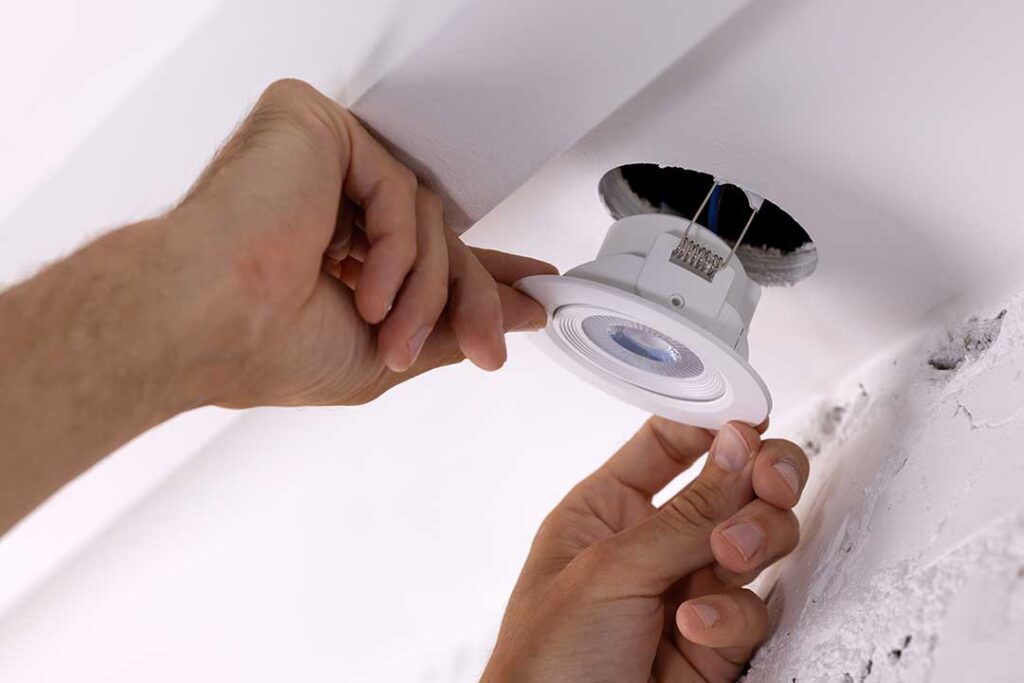
Yes. The bulb must physically fit the fixture and use the correct base. A common household screw base is labeled E26, while smaller decorative bulbs may use an E12 candelabra base. Tube-style fixtures, recessed lights, and specialty lamps may require different designs.
The shape also affects how light spreads. A standard A-shaped bulb sends light in several directions and works well in many open fixtures. Globe bulbs provide broad illumination in bathroom and vanity fixtures. Flood and reflector bulbs direct light downward or outward, making them more suitable for recessed cans, track lighting, and some outdoor fixtures.
Check the fixture label for the required bulb type and maximum wattage. An LED may use only a fraction of the electricity of an incandescent bulb, but the fixture’s rating and physical clearance still matter.
What does “dimmable” really mean?
An LED bulb labeled “dimmable” is designed to work with compatible LED-rated dimmer controls. A standard dimmer designed for older incandescent bulbs may cause an LED to flicker, buzz, turn off unexpectedly, or have a limited dimming range.
If a fixture is controlled by a dimmer, verify three things:
- The bulb is specifically marked dimmable.
- The dimmer is compatible with LED lighting.
- The bulb and dimmer are installed and used within their listed limits.
Not all dimmable LEDs behave identically. Some dim smoothly to a low level, while others may become unstable near the bottom of the range. If a room requires soft evening lighting, a bulb with a wide, reliable dimming range is usually a better choice than simply selecting the highest lumen rating.
Can any LED bulb be used in an enclosed fixture?
No. Heat is one of the main causes of LED bulb failure. Enclosed fixtures trap heat around the bulb, so the bulb should be labeled for enclosed-fixture use when required.
A bulb that is not designed for an enclosed fixture may become excessively hot, lose brightness, or fail sooner than expected. The same concern applies to tightly recessed fixtures with limited ventilation.
In homes that experience hot, humid summers, heat buildup can be especially noticeable in enclosed ceiling fixtures, attic-adjacent locations, and fixtures exposed to direct sunlight. Choosing bulbs rated for the actual fixture conditions can improve reliability.
What LED bulbs are suitable for bathrooms and outdoor fixtures?
Bathrooms and exterior fixtures require attention to moisture. A damp-rated bulb is designed for locations where moisture or condensation may occur, while a wet-rated bulb is intended for fixtures exposed more directly to water.
An uncovered exterior fixture should use a bulb with the appropriate outdoor rating. A bulb placed in a fully enclosed, weather-protected fixture may have different requirements, but the fixture instructions should guide the choice.
Avoid installing an ordinary indoor bulb in a location where water, condensation, or heavy humidity can reach the electrical components. Moisture ratings apply to the bulb and fixture together, not just to the bulb by itself.
What is color rendering, and why does it matter?
Color rendering describes how accurately a light source shows the colors of objects. The Color Rendering Index, or CRI, is commonly used for this purpose. Higher CRI values generally provide more natural-looking colors.
A CRI of 80 or higher is suitable for many general household applications. Higher-CRI lighting can be useful in kitchens, bathrooms, closets, art areas, and rooms where accurate color makes a difference.
A bulb may appear bright enough but still make food, clothing, paint, or wood tones look dull or altered. For areas where color accuracy matters, compare CRI along with lumens and color temperature.
Why do some LED bulbs flicker or fail early?
Flickering can result from an incompatible dimmer, a loose connection, a defective bulb, voltage issues, or a fixture that is not suitable for the bulb. Replacing the bulb may solve a simple compatibility problem, but persistent flickering should not be ignored.
Other warning signs include:
- A burning smell
- Discoloration around the socket
- Buzzing from the fixture
- Repeated bulb failure
- A socket that feels unusually hot
- Lights that dim or brighten without explanation
Turn off power before handling a fixture. If heat damage, damaged wiring, loose parts, or recurring electrical problems are present, the condition requires attention beyond selecting a different bulb.
How can households choose bulbs efficiently?
Start with the fixture rather than the package. Identify the socket type, fixture shape, indoor or outdoor location, dimming controls, and whether the fixture is enclosed. Then choose the lumen output and color temperature that fit the room.
For homes with several light fixtures, keeping a simple record of bulb base types and preferred color temperatures can reduce mismatched replacements. It also helps to replace bulbs in the same visible fixture with similar color temperatures so the light remains consistent.
LED bulbs are most effective when their electrical, environmental, and visual characteristics all match the space. A properly selected bulb should provide comfortable light without glare, flicker, excessive heat, or unnecessary energy use.